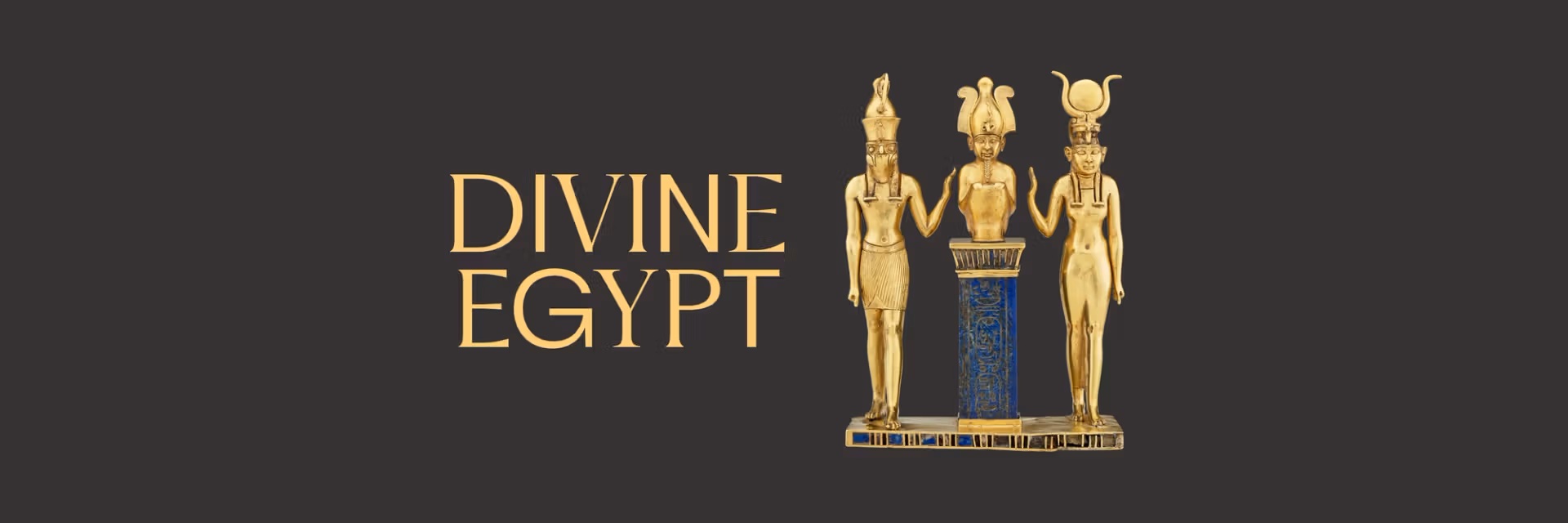
The Prophet of the Lovely Star was a young man at the height of European Egyptomania. Egyptology was making serious steps towards being a serious, systematic academic pursuit instead of a mere exotic hobby of the leisure class. AL (Liber Legis) was received while he and Rose were honeymooning, in Cairo, after laying out a little baksheesh to have some private time in the burial chamber of Pharoah Khufu. As he began laying out the philosophy, moral code and pantheon of Thelema, his vocabulary and imagery drew heavily on current knowledge of Pharoanic Egypt – his target demo may have been the hipsters of that time and Egyptomania was the hottest trend in the UK and on the continent. SO… I’m thinking the “Divine Egypt” which opens at the Metropolitan Museum in Manhattan could be pertinent or at least entertaining to our kind. The posted description says:
In ancient Egypt, images of gods weren’t just images—they brought the gods to life. Egyptians believed that it was through their depictions in tombs, temples, and shrines that the deities could enter sacred spaces and become active participants in rituals, offering a vital connection between the human and divine worlds. Over Egypt’s long history, its belief system grew to include more than 1,500 gods with many overlapping forms and traits. Subtle visual cues like what a figure wore, how they posed, or the symbols they carried helped identify them and their roles.
Divine Egypt brings together almost 250 works of art and objects, many of them on loan from institutions such as the Museum of Fine Arts, Boston, the Musée du Louvre, Paris, and the Ny Carlsberg Glyptotek, Copenhagen, to examine the imagery associated with the most important deities in ancient Egypt’s massive body of gods. Depictions of the stately falcon-headed Horus, the lion-headed Sakhmet, and the serene, shrouded Osiris reveal the striking ways the kings and people of ancient Egypt recognized and interacted with their gods.
While the king had a daily direct relationship with the gods in the inner sanctuaries of great temples, people without such access found ways to connect with their gods through rituals, offerings, and objects of private devotion. This immersive look at how deities were depicted reveals the many roles they played in people’s lives, providing them with meaning in front of life’s uncertainties and the permanence of death.
https://www.metmuseum.org/exhibitions/divine-egypt