
-WOLFGANG GRASSE
“An artist should always be a political being”
Stephen Romano, Wednesday, August 6th, 2025.
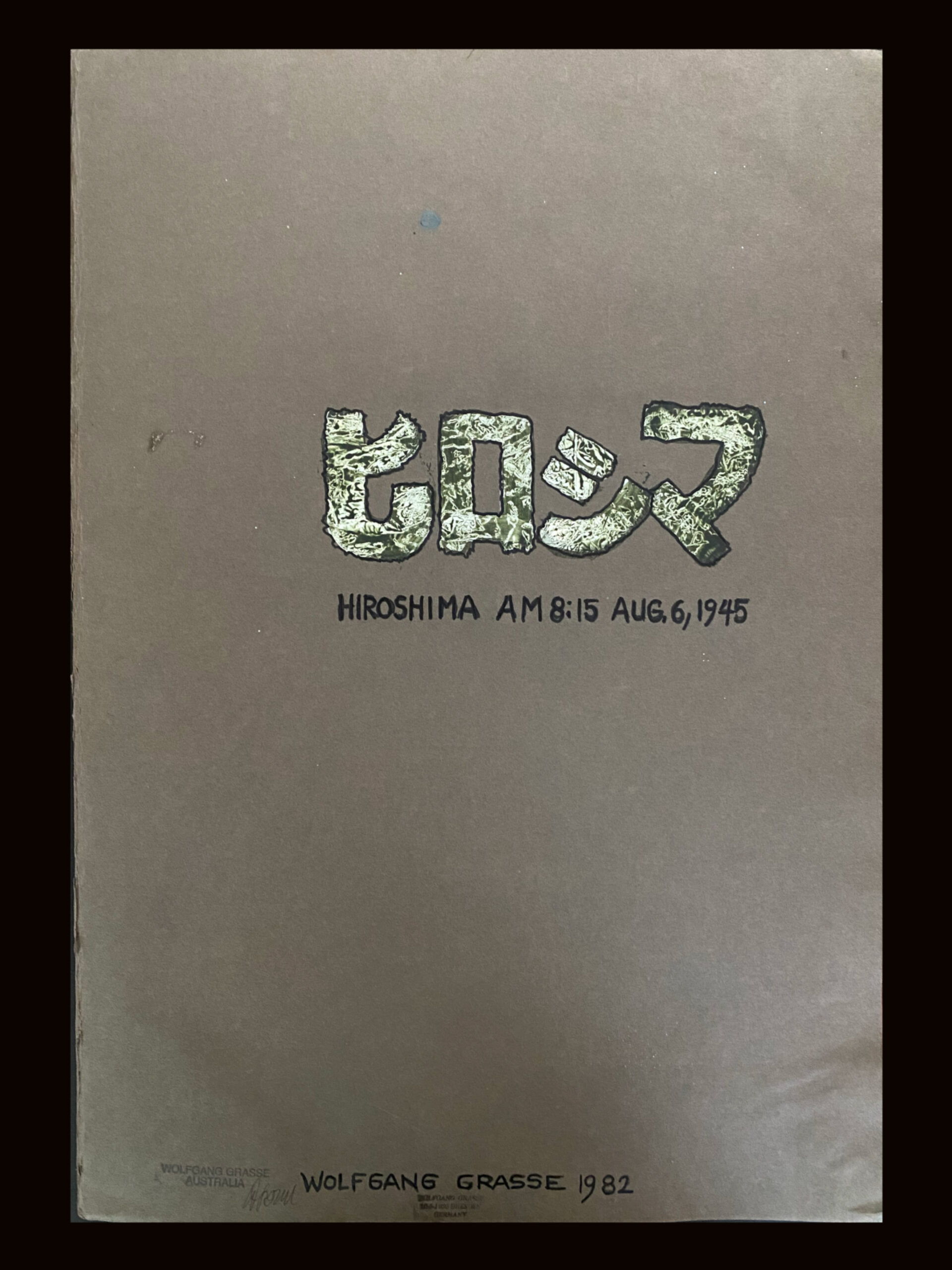
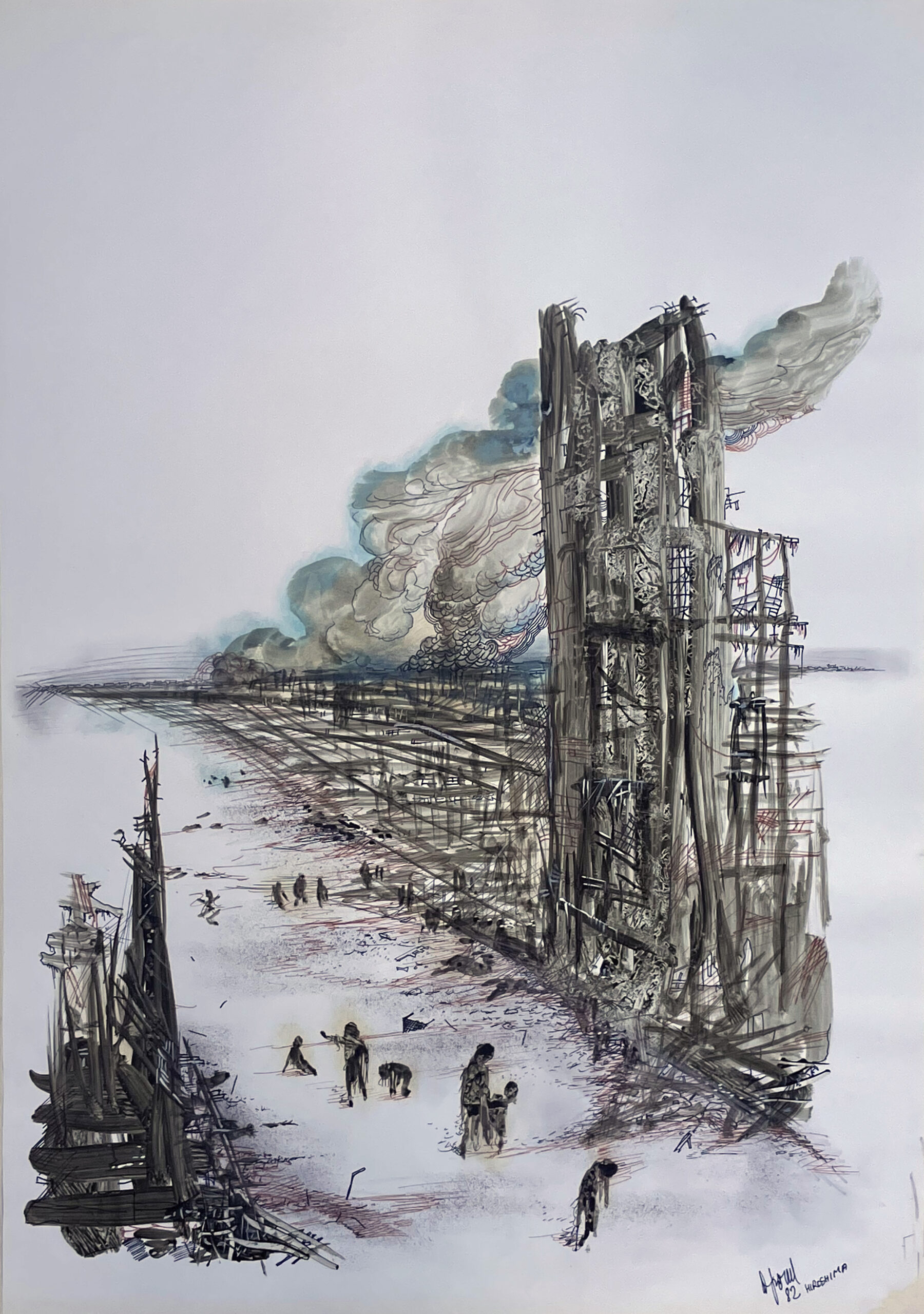
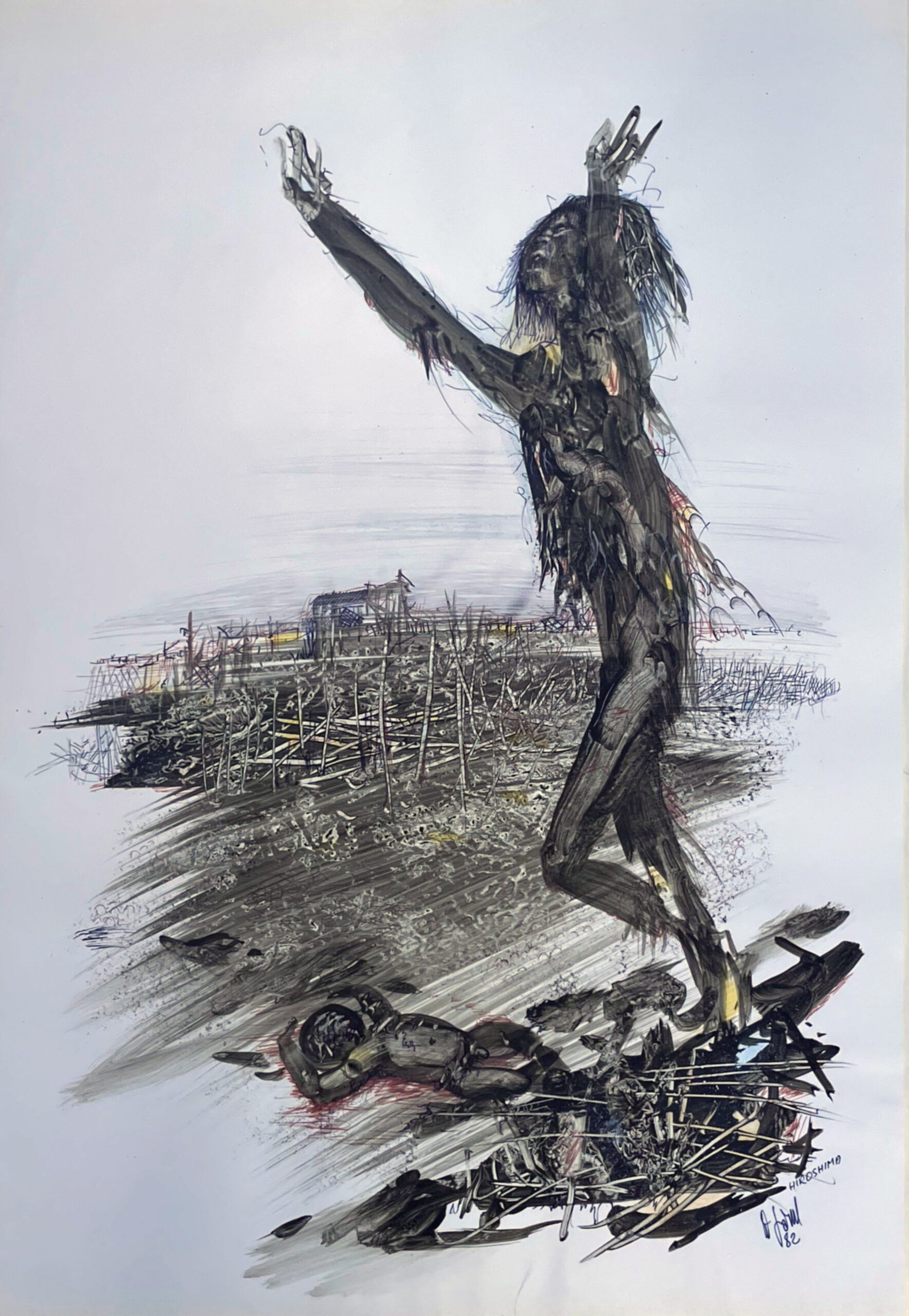
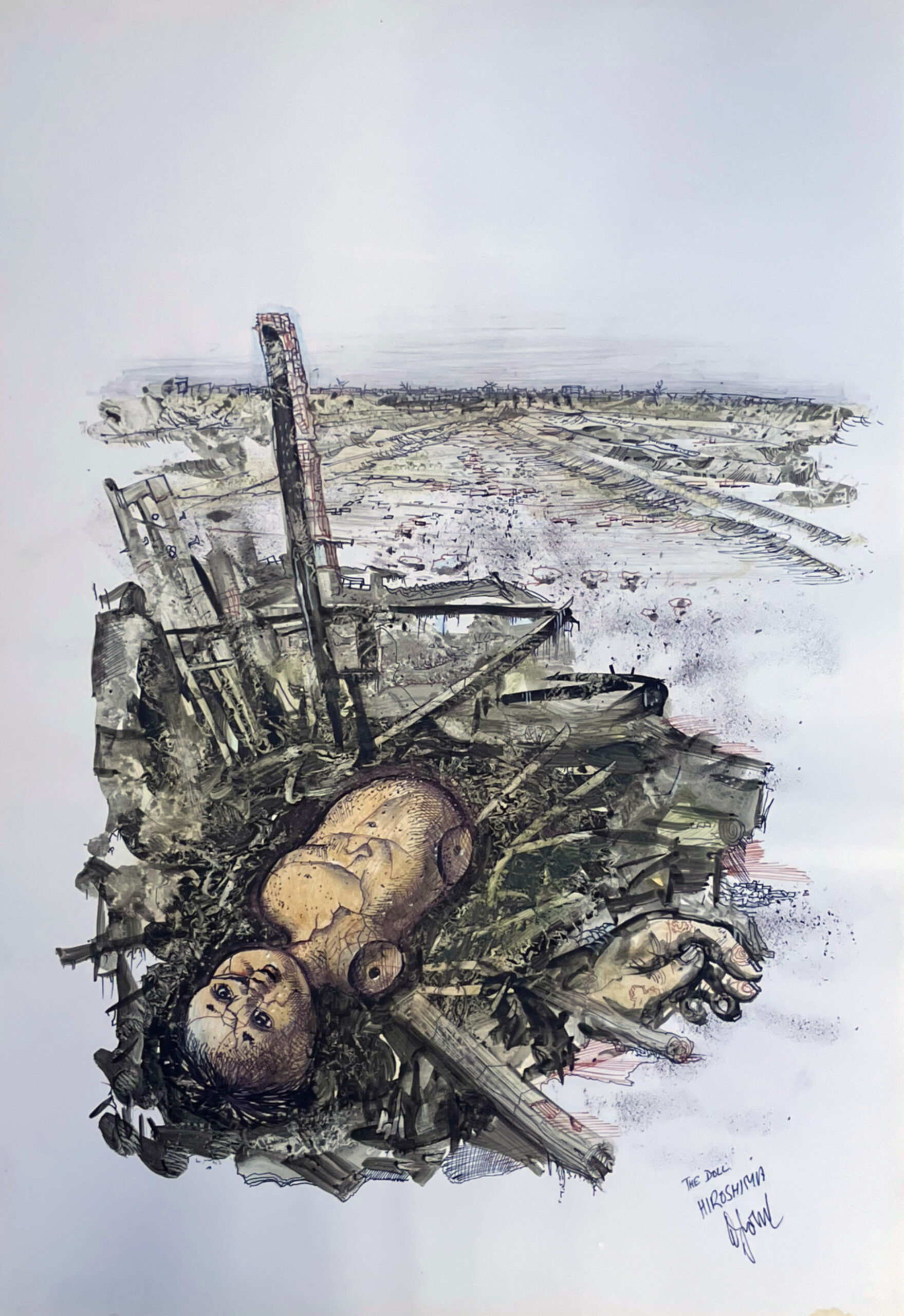
On the 80th anniversary of the Hiroshima bombing, I am honored to present what I consider a monumental body of work—WOLFGANG GRASSE’S “HIROSHIMA” SERIES – comparable in impact to Goya’s “Disasters of War,” Henry Darger’s “In the Realms of the Unreal”, and David Bomberg’s WWI sketches and poetry. George Widener’s powerful drawings of the Russia-Ukraine conflict continue this profound artistic legacy.
As a curator, dealer, and collector, I’ve been fortunate to lend and contribute to many significant projects, including producing a book on visionary artist Charles Dellschau, rescuing and resurecting William Mortensen’s “A Pictorial Compendium of Witchcraft and Demonology,” producing the catalogue for the “Homage to H.R. Giger” exhibition, and showcasing Burt Shonberg’s work for the first time in 65 years and manifesting not one, but two beautiful cataogues on the artist.
Other highlights include reuniting the Woodbridge Figures, curating the “Saint Bowie” tribute exhibition, and curating “No Stars,” a Twin Peaks tribute exhibition, which featured the late Rebecca Del Rio performing at the opening reception.
Collaborations with esteemed institutions such as Morbid Anatomy, Greenwood Cemetery, the Buckland Museum of Witchcraft, Gagosian Gallery, the Met, The Reina Sofía Museum, The Minneapolis Art Institute, The Houston Museum, The Library of Esoterica, and many others have reaffirmed my commitment to centering artistic integrity and authenticity.
Wolfgang Grasse was born in Dresden, Germany in 1930. At the age of 15 Grasse saw firsthand the hell and horror unleashed during the British and American bombing of the city of Dresden. This event traumatized him for the rest of his life.
Afterwards, he left Germany for Italy to study art under his grandfather, Friedrich Grasse. Upon his return in 1948 Grasse was arrested by Soviet authorities crossing into East Germany to visit his father for his drawing of an anti-Soviet cartoon of Stalin hanging from the gallows. Initially convicted to a death sentence, he was sentenced to 25 years hard labor in the east German gulag of Bautzen. He spent 8 years in prison, and says that the only way he survived was by his art. Grasse would bribe the guards with drawings of erotic images or portraits of their family in exchange for food and protection.
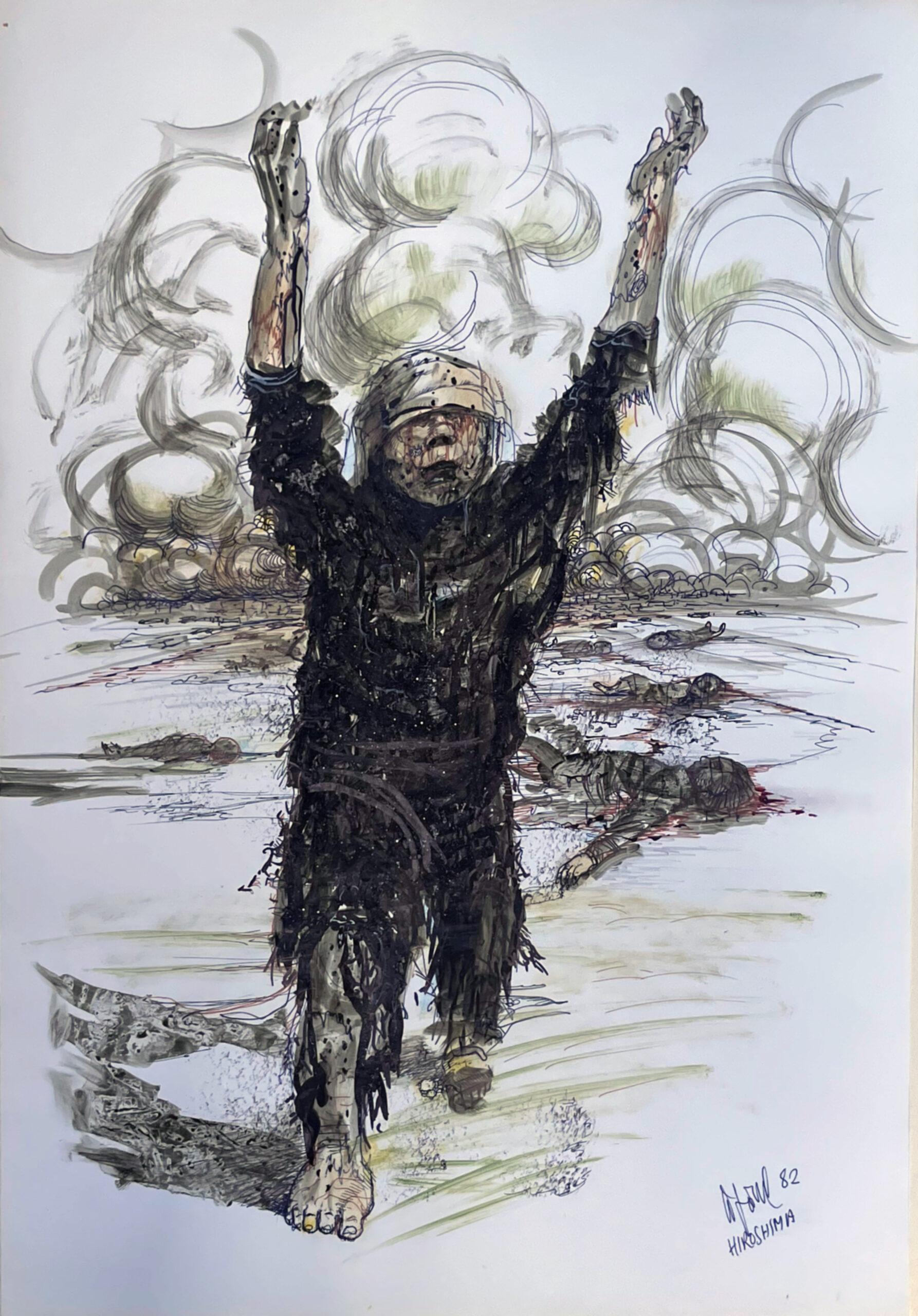
Once released, he resumed his artistic career in Berlin, In 1966, Wolfgang Grasse and his young girlfriend joined an exodus from Germany to Australia. After living in Sidney for a year or so, he alone relocated to Penguin, Tasmania, where he was a freelance illustrator and writer of children’s books, mostly of Asian subjects, as well as continuing his artistic practice and exhibiting his art.
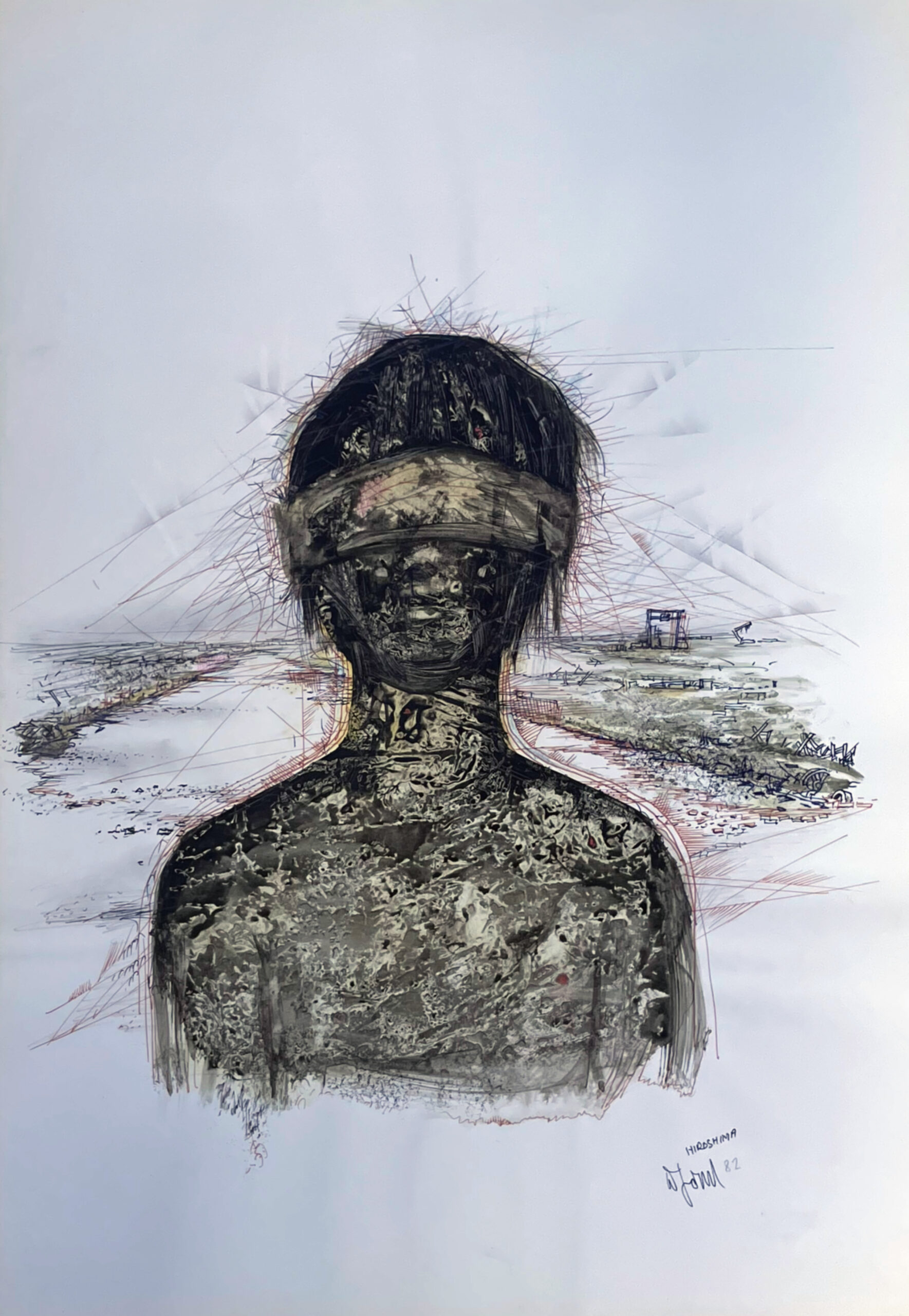
rasse has stated that even while living in the bucolic beauty and tranquility of Tasmania, he still suffered from terrifyingly vivid nightmares, particularly about his time in the gulag, which led him to become a devout Christian. Grasse stated that he was never sure if he was actually living a life in bucolic Tasmania and having nightmares about the prison, or if he was really still in the Gulag, and only dreaming there about having a tranquil life.
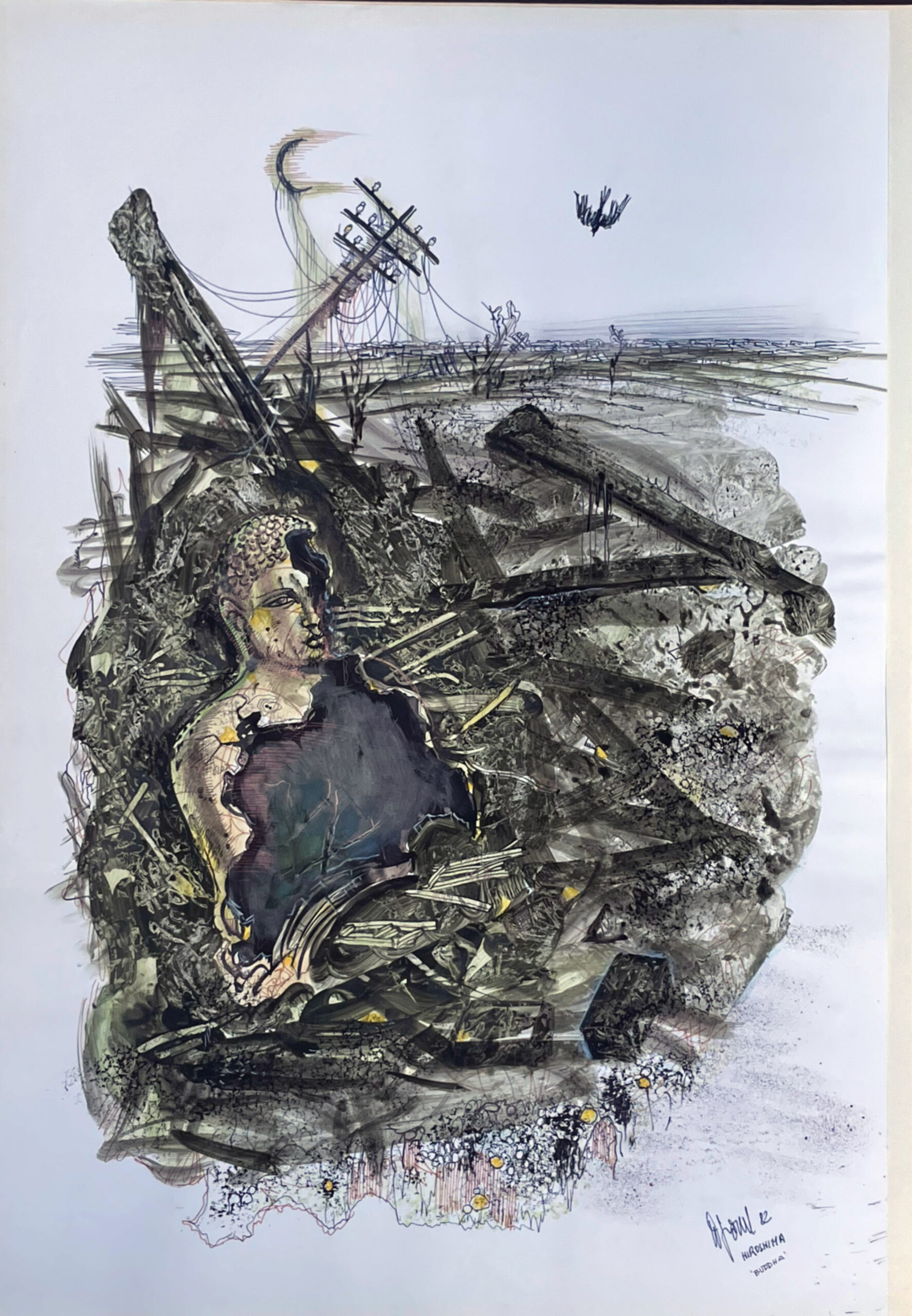
Unlike artists shaped by traditional academic training, Wolfgang Grasse forged his artistic voice through lived experience, channeling personal trauma into cathartic visual narratives. Technically gifted, Grasse’s early admiration for the meticulous works of Hans Memling, Hieronymus Bosch, Albrecht Dürer, and other masters displayed at the Gemäldegalerie Alte Meister and the Museum für Völkerkunde in Dresden laid a strong foundation for his craft.
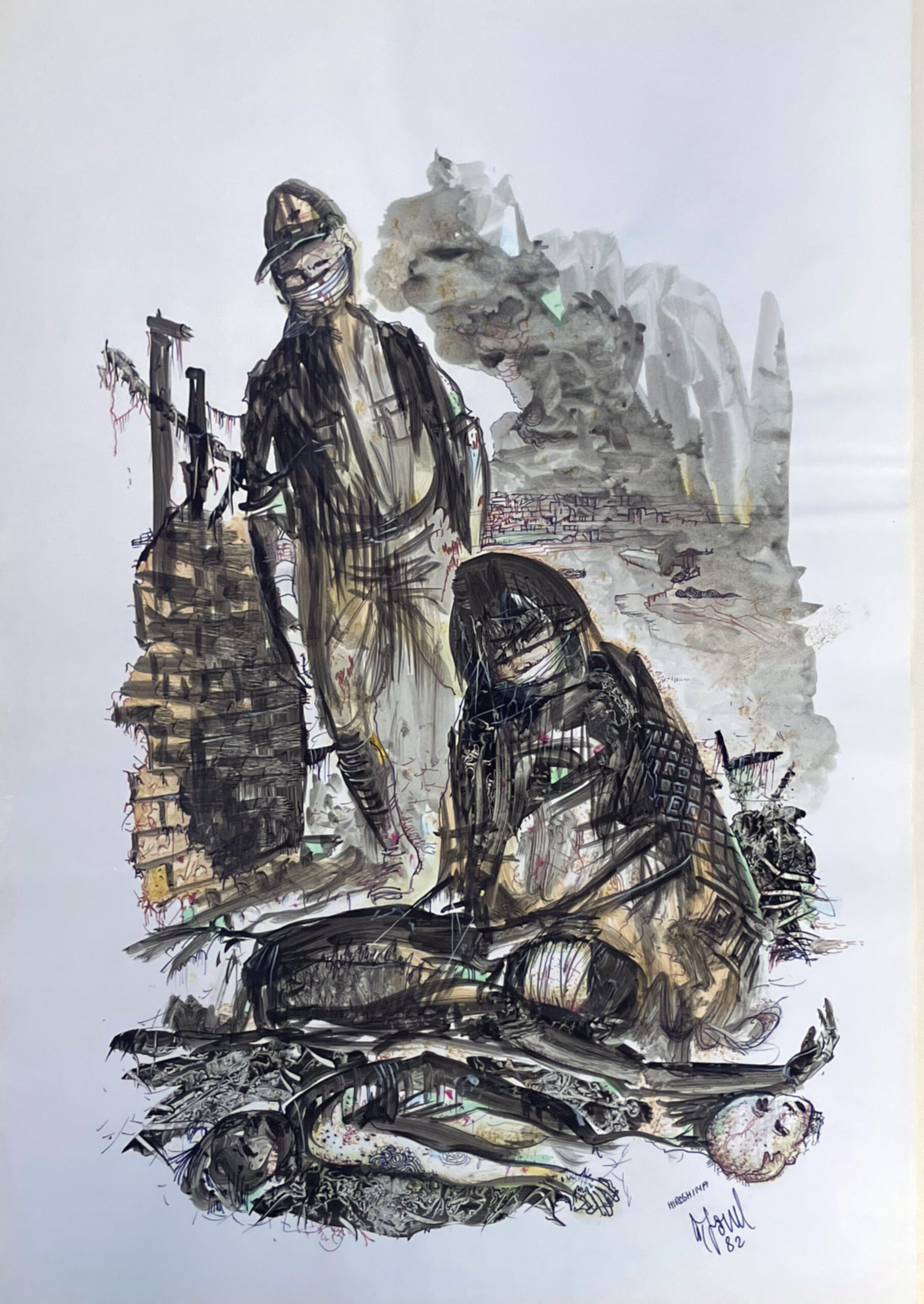
Grasse’s exposure wasn’t limited to European influences—Japanese artists such as Hokusai, Kunisada, and Hiroshige also left a profound mark on his evolving aesthetic. These diverse inspirations helped shape a unique style that paid homage to technical mastery while boldly expressing the anguish and resilience rooted in his personal history.
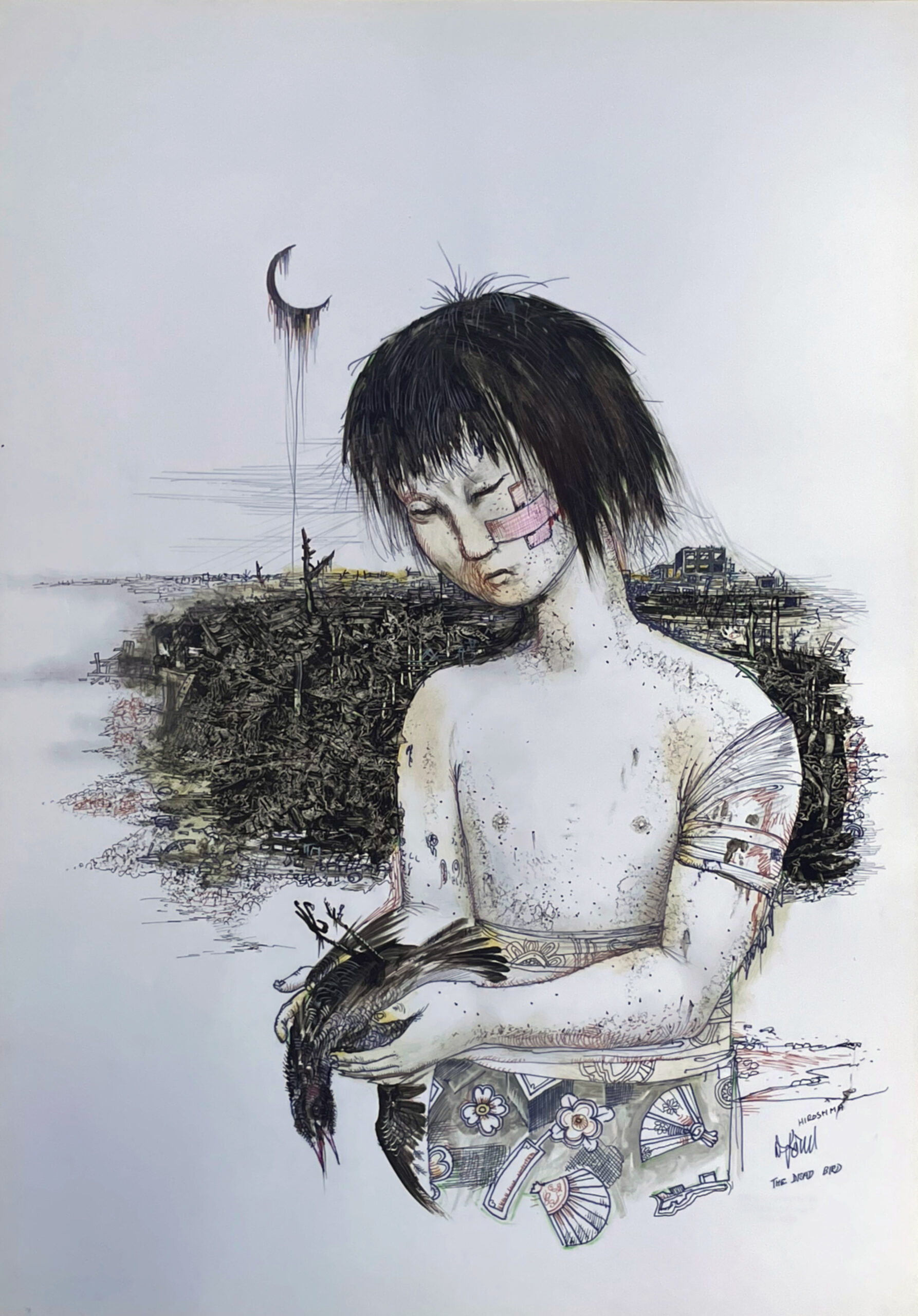
Yet in the end, an artist is judged not by intentions but by the work of his hands. Grasse’s art—rich in symbolism, technique, and emotional depth—has earned international acclaim. His visionary works resonate especially in our current era, where images of genocide, war, human rights violations, and the destruction of vital infrastructure are streamed directly to our electronic devices.
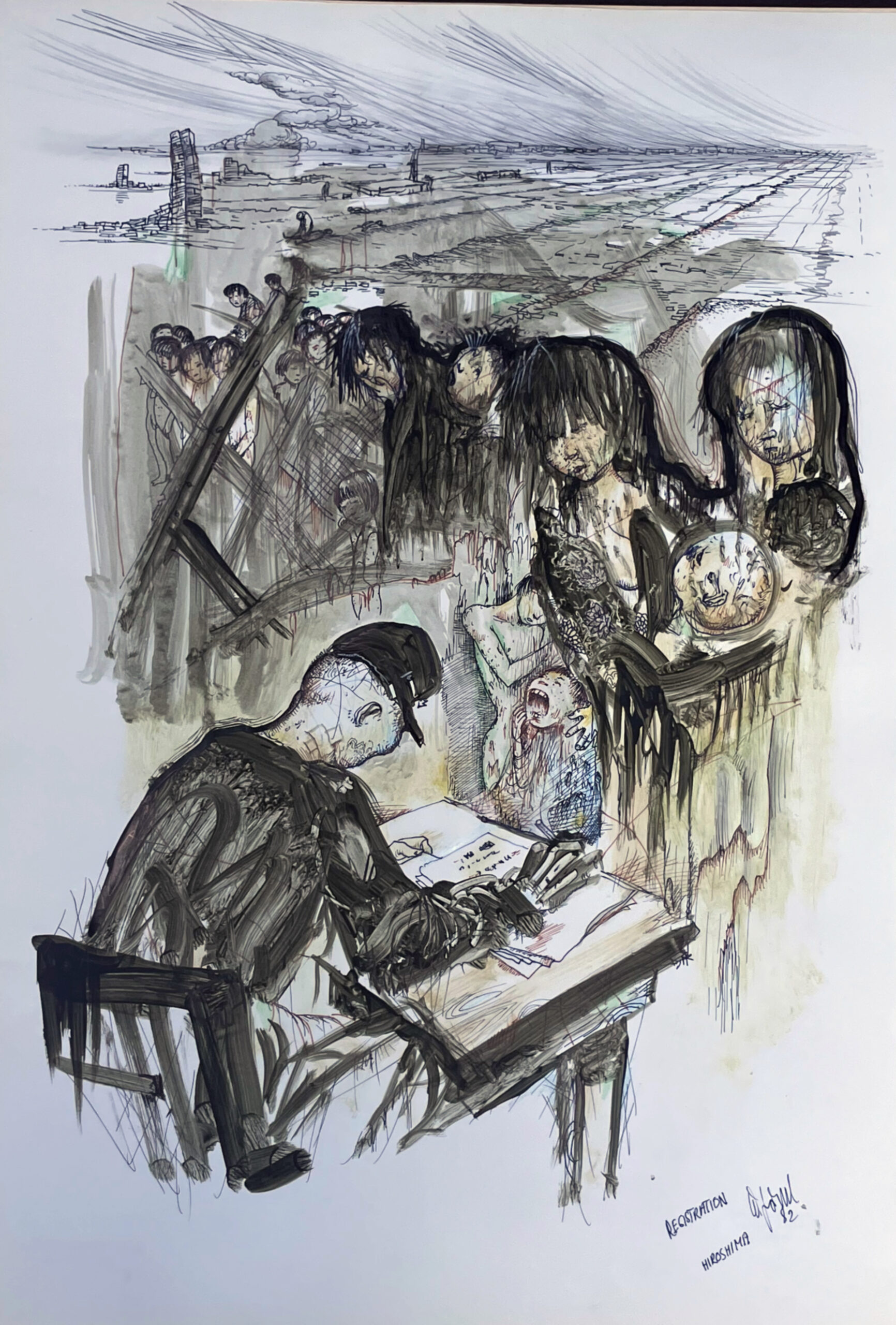
In such ever-bewildering times as ours, the searing honesty of Grasse’s work feels not only relevant, but essential.
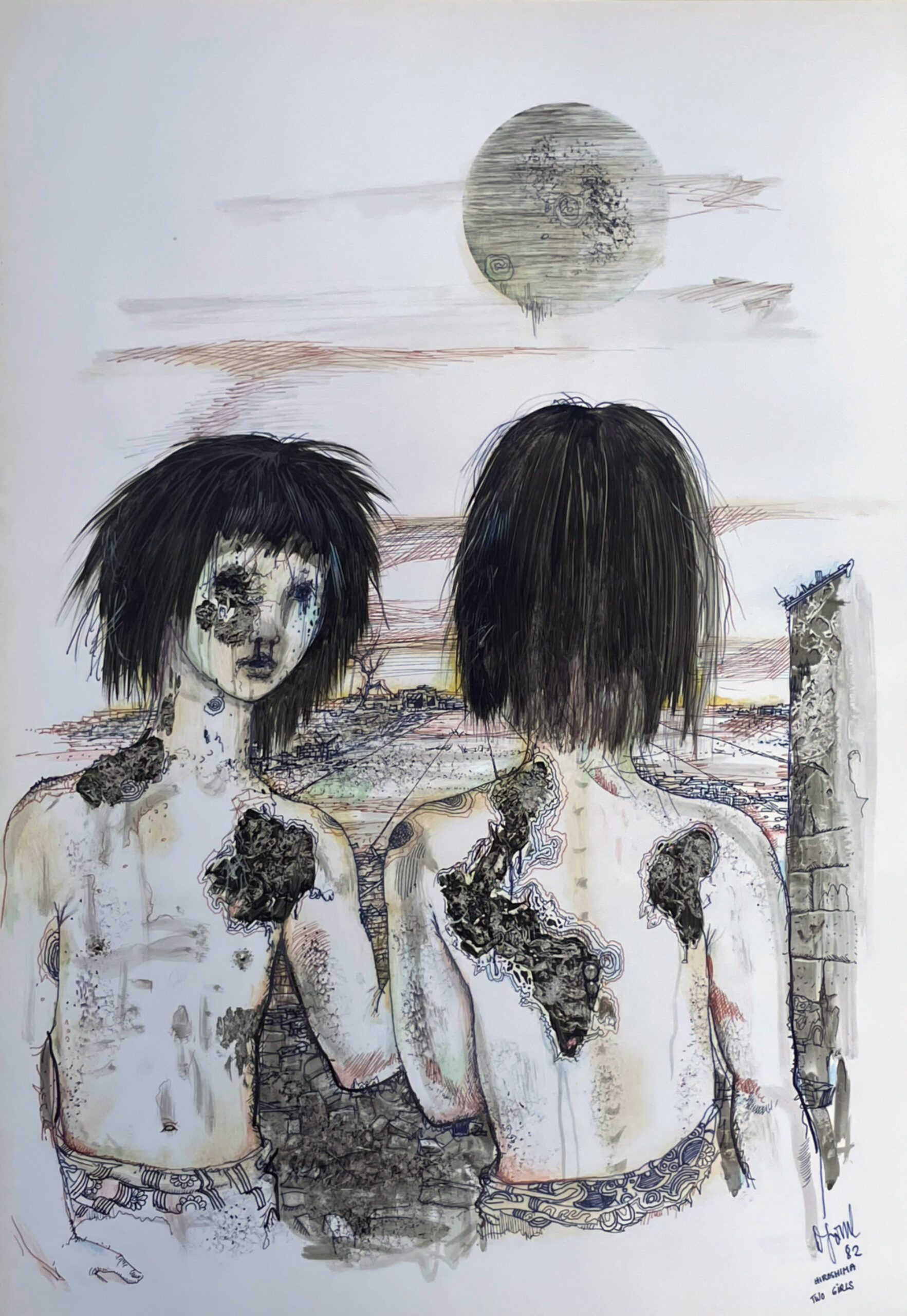
“The political theme in art is very important, an artist should always be a political being.. Picasso was very political, look at his “Guernica” painting.. We have to paint about war, against war, not to glorify war, I mean that’s absurdity, if you glorify war then you’re a fascist and a Nazi, Nazis glorified war. War has to be shown in film, in theatre, in literature, and in art. It always has to be shown, the cruelty of war, and it has to be shown skillfully and technically very well. And it should be shown in a very symbolic way, not in a garish or photorealistic way, because then it’s misunderstood again.”
-Wolfgang Grasse.
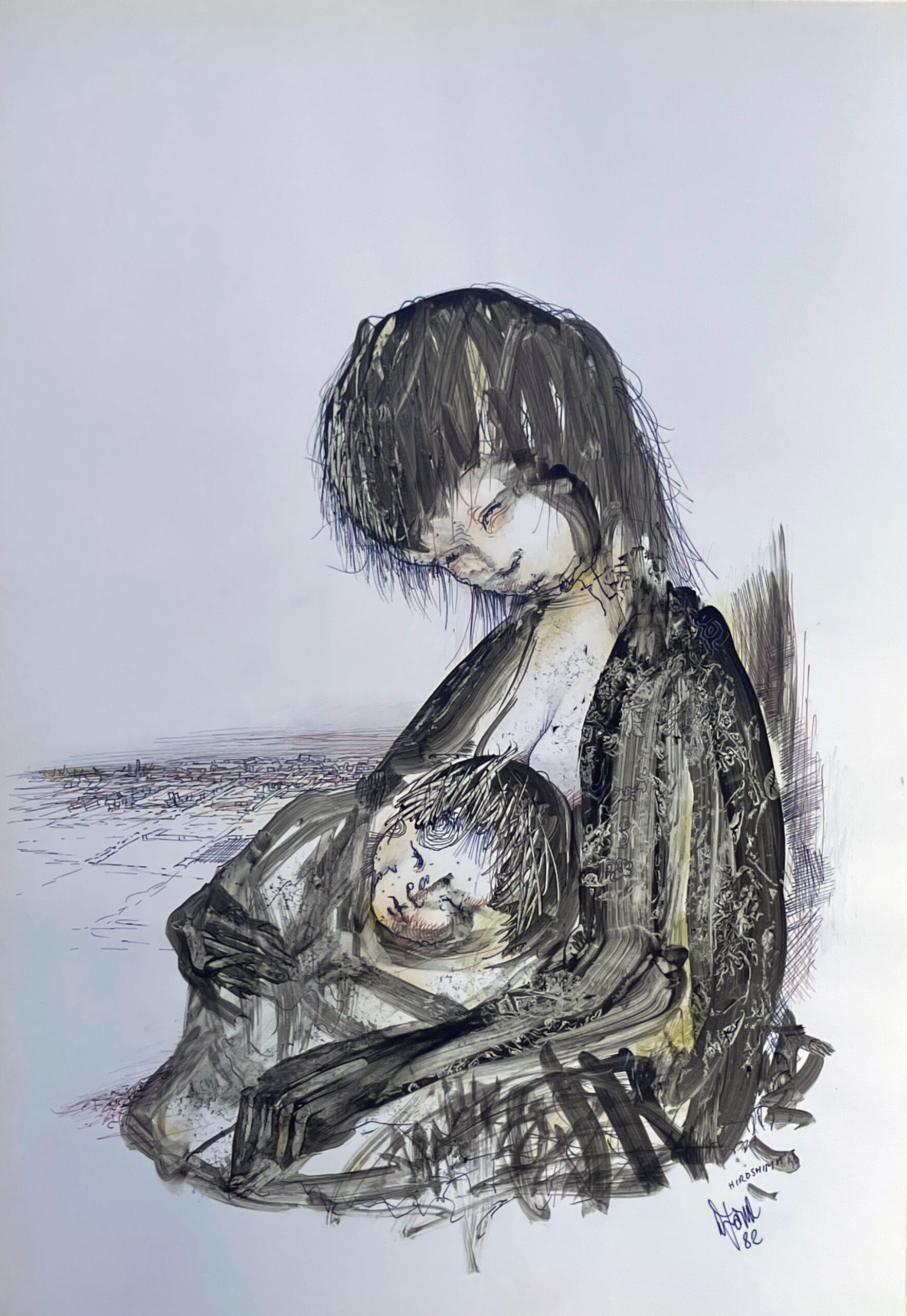
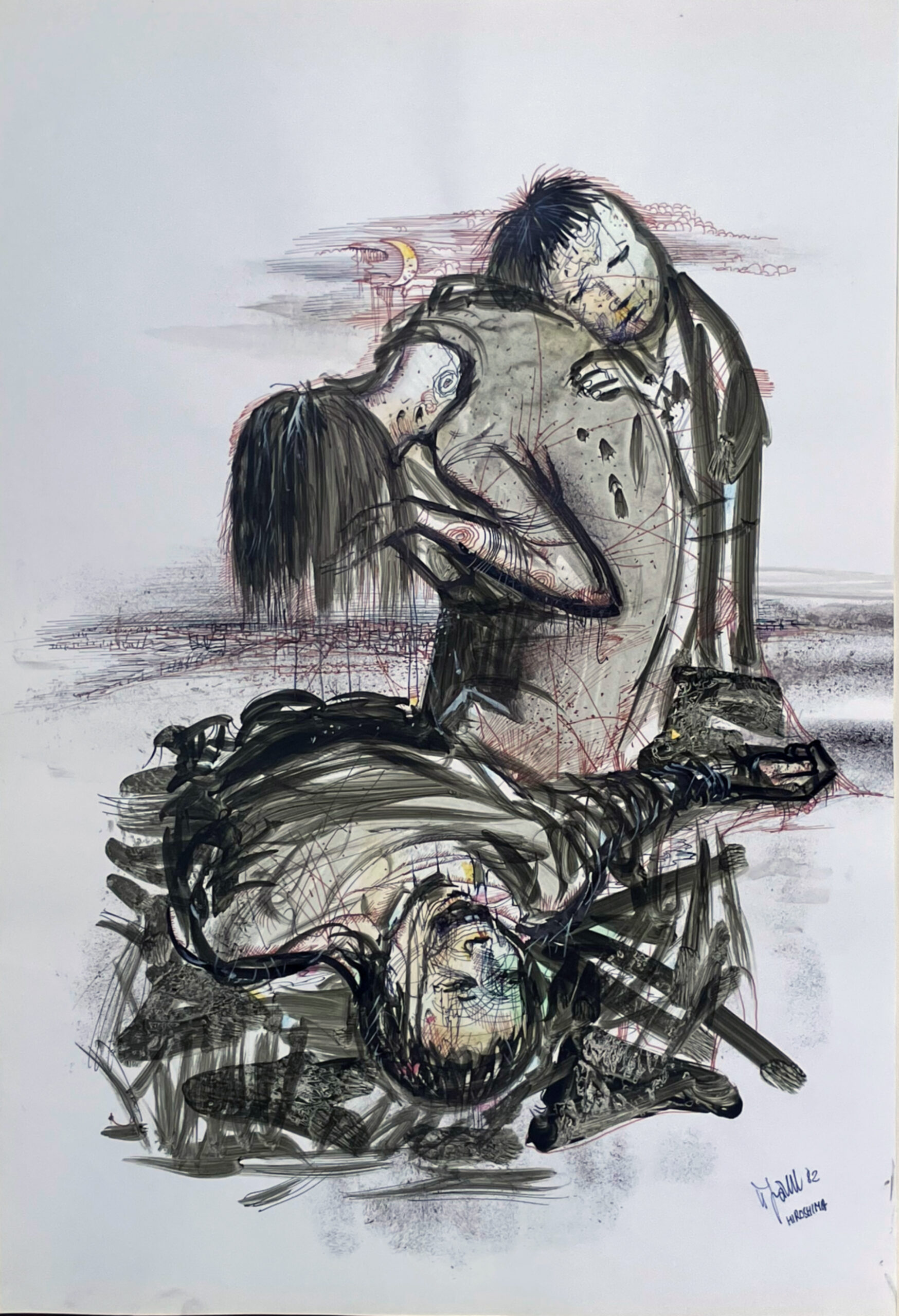
Fall of an Insignificant City
Wolfgang Grasse, 1982
The sky had taken on that delicate violet-blue that transfigured and made all things quiet beneath it. The smell of tiredness and forgetfulness emanated from this color.
The city lay crucified broadly on its streets. Impotent and flat, surrounded by distant, hazy mountains and platinum-colored nearby hills. She was swimming as if in a flat plate, the edge of which did not allow her to expand and spill over even wider, even more crucified. So forgotten in the violet blue, forgotten in weariness and broadly crucified, crouched and without hope, but in triumphant expectation lay the city, surrounded by pale copper-colored mountains and blue-silver crane-feathered heights.
3a, the sky – still transfigured by the color of tiredness – stretched its bell world over the city, dumped melancholy, pink-violet oblivion over the plate built by a thousand wooden and stone buildings and closed.
Locked hermetically. From now on it’s flooded with light, like a glass tomb, it’s closed off. . . the insignificant city.
Completed the plain crossed by small little trees. Heaven closed the powerless, tired and dreamy city crucified on large street beams. . . Soon the middle of the sky was marked above the center of the city.
The bell of the violet sky that encircled the city like a glass tomb chamber was marked by a tiny, silver ascendant whose insignificance became more questionable by the second.
The people of the city saw. And unimpressed by the miraculous harmlessness of this process, they went along, RicheInd, with a headache, forgetting.
The people of the city saw. And unimpressed by the miraculous harmlessness of this process, they went along, RicheInd, with a headache, forgetting.
Never before had people behaved so indifferently towards certain events as in this city.
Oh, if I could have warned you, you crucified one. Oh, I could have screamed your name in four syllables.
The parabola of heaven was calculated. The space, the height, the depth were measured. The ellipse of the sky was calculated. The vault was calculated, the dome, which enclosed all three-dimensional things, was mathematically successful. Invisible framework made of forms over the city. The whole thing seemed nothing more than petty geodiite nonsense.
And the city?
Its width was measured. Their depth was measured. Her spar was sized. Your time was measured. Her breathing was measured. The sky above the city was mathematically and statistically fixed.
Oh, city with the black hand raised. Oh, shattered plains and ash crucibles between platinum and rusty heights of deadly wind!
If I could have warned you, you crucified one, cry out in the ears of your drunken houses. . . Screaming your name in four syllables: “HIROSHIMA”!
continue to see the whole series
download PDF FREE at ARCHIVE. org
Scroll down and choose the download PDF option for best results.
https://archive.org/details/wolfgang-grasse-hiroshima
See also http://www.wolfganggrasse.com
