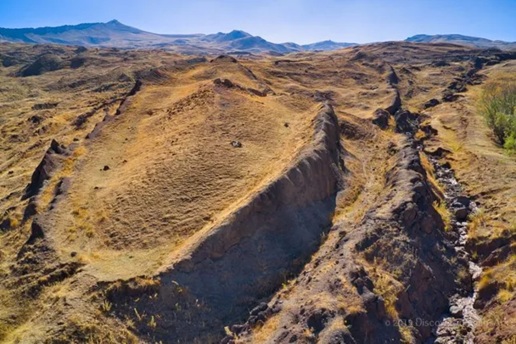
This kind of “coverage” of archaeological matters frosts my corn flakes, frankly. The headline screams: “After thousands of years, archaeologists think we’ve finally found ‘Noah’s Ark’” yet a quick read indicates that the only discoveries made are of artifacts indicating human habitation in the vicinity of Mount Ararat between 5500 and 3000 BC “a timeframe that some scholars and believers associate with the era traditionally linked to the Biblical figure of Noah.” WOWZERS!
- so this is a time period some 2500 years long.
- none of these artifacts have anything to do with the story of Noah, a great flood or a monumental ship that he as a host of other creatures road out the storm in.
Since homo sapiens wandered out of Africa some 150,000 years ago (as suggested by the study of analysis of mitochondrial DNA worldwide) and populated (if thinly) the entire planet by 23,000 BC – that there’d be materials indicative of human activity and in Turkey – which is straight up from the landbridge between Africa and… well, the rest of the world. It’s also the site of some of the earliest evidence for agriculture, settled human life style, and — basically — civilization.
The one interesting point the article raises without comment, is that Mount Ararat boasts a rock formation suggestive of a ship. In all the years that science has known of and studied this site, there’s never been any evidence presented that this formation if formed of petrified wood. In fact, the rock itself has never been officially, definitively dated.
One wonders if this ancient, natural formation in fact inspired the various Middle Eastern myths about survivors of a great flood who rode it out in a huge ship i.e. the Sumerian Enuma Elish as as we the Jewish story in Genesis. Ancient literature contains many fanciful stories to account for things like the stars, planets, sky, the procession of seasons that humans were confronted with and tried to explain as best they could.
There is talk of marine sediments in the area… but there are marine sediments all over the planet, some incredibly ancient that make their way to the surface with earthquakes, volcanic activities and so on. There’s evidence of human use of tar dating back 40,000-70,000 years with the tar itself dating back 66 – 145 million years ago. The stuff just bubbled up from below.
Just sayin’!
https://metro.co.uk/2025/12/26/pottery-fragments-prove-great-flood-noahs-ark-real-25831038/