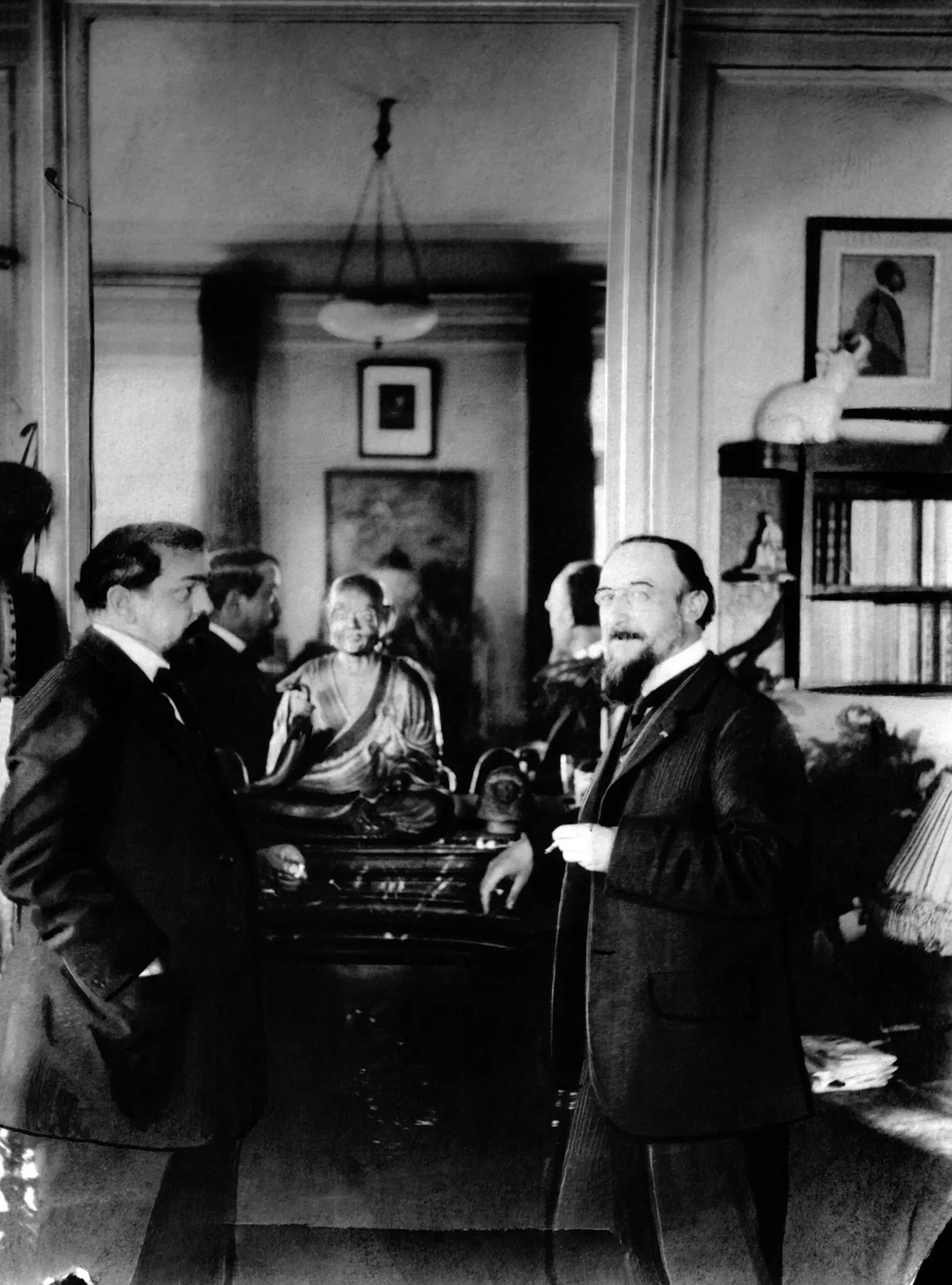
The New York Times recently ran a feature on Erik Satie on the occasion of his 100th birthday. Satie is justly celebrated as an influential figure in the development of modernist music styles. Not as widely acknowledged is his involvement in the French occult revival of the late 19th century. He was house pianist at the favored watering hole of this circle, the Chat Noir in Montmartre, composed music for Josephin Peladan’s Rose + Croix Salon. Others on the scene included Jules Doinel, founder of the Gnostic Church of which the EGC is a descendant organization, and Gnostic Saint, Gerard Encausse. Golden Dawn founder MacGregor Mathers was acquainted with this crowd and some attended his public rituals in Paris. Here’s a link to a Satie playlist on the O.T.O. USA Spotify page: https://open.spotify.com/playlist/7aPNg3ykkqwZ20jOwfO6GI?si=J2PMY6cOSqmj5Vw8kCnv2A
One excerpt from the article reads:
The title “Gnossiennes” reflects a gnostic interest; Satie was getting involved with the esoteric mysticism of Rosicrucianism, a centuries-old movement guided by a belief in ancient wisdom. At the end of the 1800s, Rosicrucianism resurfaced in gaudy Pre-Raphaelite art and the writings of W.B. Yeats. In Paris, it was led by the flamboyant cult leader Joséphin Péladan, who had named himself the high priest of the Order of the Rose+Croix.
Satie became entwined with the Rosicrucians to the point where his music was directly inspired by them, including the suite “Sonneries de la Rose+Croix.” One of its movements, “Air du Grand Maître,” which , refers directly to Péladan.
read the whole feature:
https://www.nytimes.com/2025/07/01/arts/music/erik-satie-100.html