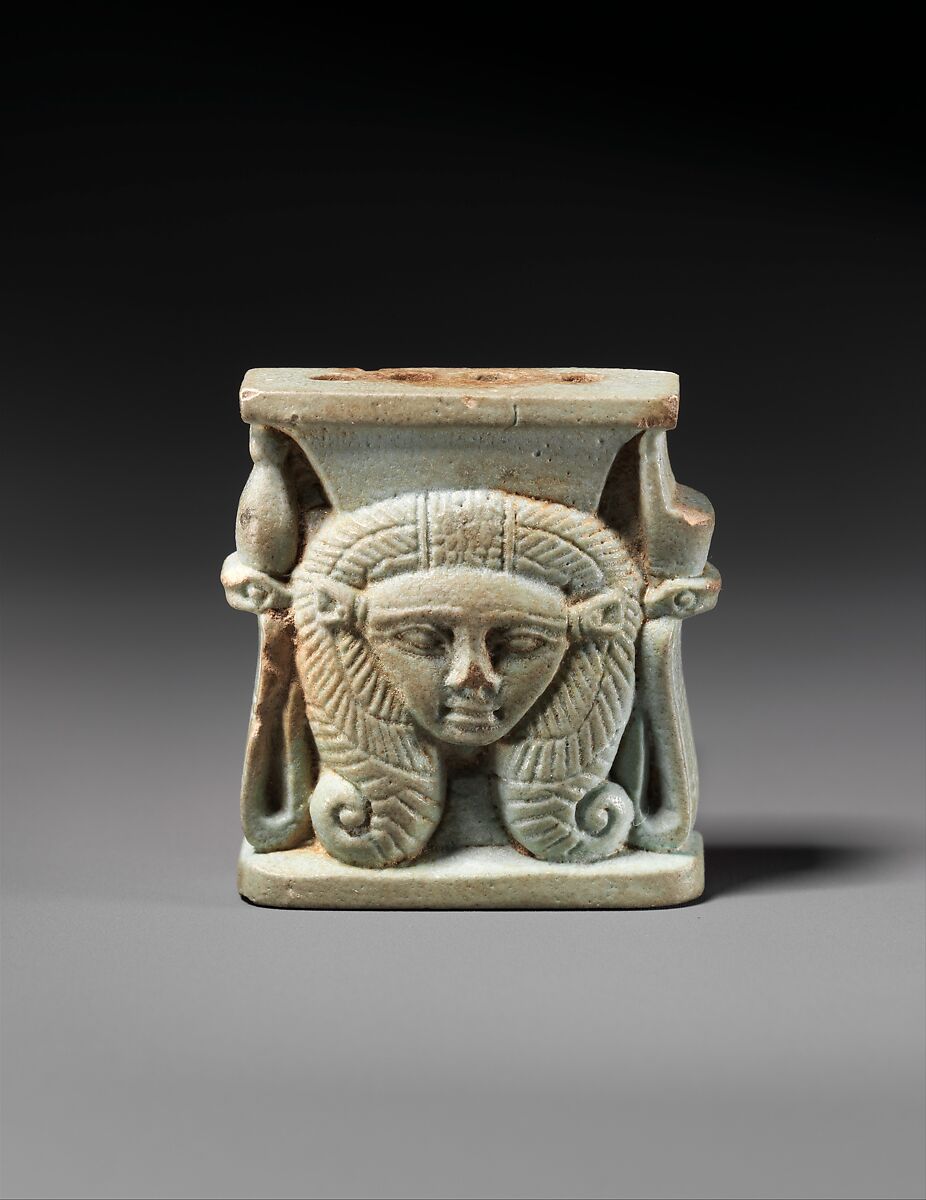
We’d already written a bit about the Metropolitan Museum of Art in NYC’s “Divine Egypt” exhibit, noting that the Prophet of the Lovely Star living at a time of rampant Egyptomania, when fascination with various aspects of Pharaonic Egypt being an integral part of pop culture in the early 20th century and how that impacted the imagery and theurgic vocabulary he wove into the Thelemic religion. The New York Times recently ran a review of this exhibit, explaining some of the unique conceptual features that went into it’s organization, frankly I think it makes the exhibit all the more occultist-friendly? To wit:
“The exhibition, organized by Diana Craig Patch, curator in charge of Egyptian art at the Met, and Brendan Hainline, research associate, has been designed as a kind of open-plan succession of individual spaces, each devoted to a single god. So we meet them one by one, in their offices — chapels? — where they reveal themselves fully, as personalities, with the quirks, contradictions and surprises that implies…
Dating from the second millennium B.C., and borrowed from the Museum of Fine Arts in Boston, Hathor’s is one of the earliest known images of the goddess and the centerpiece of what amounts to a mini-exhibition devoted to her.
She was a very big deal for a very long time, with temples built in her honor, a female committed to her service, and a passel of other goddesses — Isis was one — adopting aspects of her multivalent “look.” In human guise Hathor was a promoter of motherhood; incarnated as a lioness or serpent she was a fierce protector of her devotees. In bovine form she was a central player in the cosmic creation, balancing the sun on her head and bringing light to a newborn world.
Read the entire review: